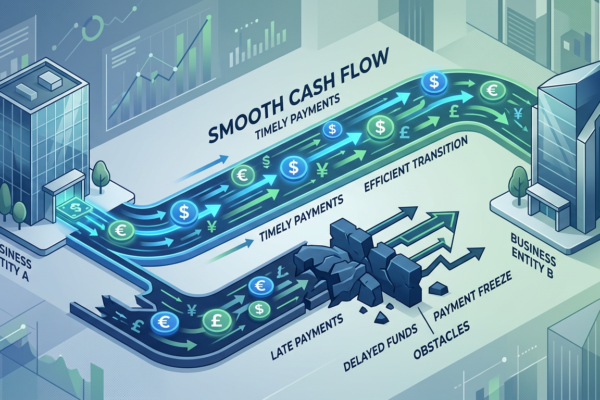
Running a small to medium-sized enterprise (SME) in the UK often means balancing numerous responsibilities, and ensuring healthy cash flow is paramount. Late B2B payments can significantly disrupt this balance, leading to financial instability and hindering growth. Understanding why they happen and how to prevent them is crucial for any SME owner.
The Impact of Late Payments on SMEs
Late payments are more than just an inconvenience; they can have a cascading effect on your business. When customers delay paying their invoices, your working capital is tied up, making it challenging to cover your own operational costs, pay suppliers, or invest in new opportunities.
This can lead to a reliance on overdrafts or other forms of credit, incurring additional costs. In severe cases, persistent late payments can even threaten the viability of an otherwise healthy business, leading to insolvency.
Common Reasons for Late Payments
Identifying the root cause of late payments is the first step towards prevention. While some delays are deliberate, many stem from common administrative issues or misunderstandings.
Administrative Errors
Invoice discrepancies, incorrect billing details, or goods/services not matching the order can all lead to payment delays. Sometimes, the invoice simply isn’t sent to the right person or department within the client’s organisation.
Cash Flow Issues at the Client End
Your clients might be experiencing their own financial difficulties. This isn’t always an indictment of your service; it can be a symptom of broader economic challenges or poor internal financial management on their part.
Disputes and Dissatisfaction
If a client is unhappy with the product or service, or disputes the charges, they might withhold payment. These issues should be addressed promptly and professionally to avoid escalating into significant payment delays.
Lack of Clear Payment Terms
Ambiguous or non-existent payment terms can create confusion and provide an excuse for delayed payment. Clarity is key in all commercial agreements.
Proactive Strategies for Prevention
A robust credit control process is your best defence against late payments. Implementing these strategies can significantly reduce your Days Sales Outstanding (DSO) and improve cash flow.
Thorough Customer Credit Checks
Before extending credit, always conduct thorough credit checks on new clients. This applies to all B2B transactions where payment is not made upfront. Understanding a client’s payment history and financial health can help you assess risk.
For existing clients, consider regular reviews of their creditworthiness, especially for large contracts or during economic uncertainty. Tools and services are available that can provide detailed credit reports on businesses.
Clear and Comprehensive Payment Terms
Ensure your payment terms are crystal clear and communicated effectively from the outset. These should be included on all quotes, contracts, and invoices. Clearly state the due date, acceptable payment methods, and any penalties for late payment as stipulated by the Late Payment of Commercial Debts (Interest) Act.
For example, specifying “Payment due 30 days from invoice date” leaves no room for ambiguity.
Efficient Invoicing Process
Send invoices promptly after goods or services are delivered. Delays in invoicing inevitably lead to delays in payment. Ensure your invoices are accurate, professional, and contain all necessary details, such as purchase order numbers (if applicable), itemised lists, and your bank details.
Digital invoicing systems can automate much of this process, reducing errors and speeding up delivery.
Effective Credit Control and Chasing Overdue Invoices
Even with the best preventative measures, some invoices will inevitably become overdue. A systematic approach to chasing these payments is essential.
Timely Payment Reminders
Don’t wait until an invoice is severely overdue to start chasing. Send polite reminders a few days before the due date, on the due date, and then progressively more firm communications after the due date passes. Many late payments are simply oversights.
Structured Communication Plan
Develop a structured plan for following up on overdue invoices. This might involve a series of emails, phone calls, and formal letters. Keep meticulous records of all communications, including dates, times, and summaries of conversations.
Escalate the communication gradually. Initial reminders can be gentle; subsequent ones should highlight the overdue status and potential consequences, such as late payment interest and compensation for recovery costs as allowed by law.
Building Strong Client Relationships
Maintain open lines of communication with your clients. Sometimes, a phone call can resolve an issue faster than a series of emails. Understanding their challenges might allow you to offer flexible payment plans, which can be better than no payment at all.
When to Escalate to Professional Debt Recovery
If your internal efforts prove fruitless, consider engaging a professional debt recovery service. This can often be more cost-effective and efficient than pursuing legal action yourself, particularly for larger or more stubborn debts. A good debt recovery firm understands the legal landscape and has the resources to pursue payment diligently, allowing you to focus on your core business activities.
Conclusion
Mitigating the risk of late B2B payments requires a proactive approach, clear processes, and effective communication. By implementing robust credit control measures and knowing when to escalate, UK SMEs can protect their cash flow, reduce financial uncertainty, and foster sustainable growth. Don’t let late payments jeopardise your hard work; take control of your receivables today.